
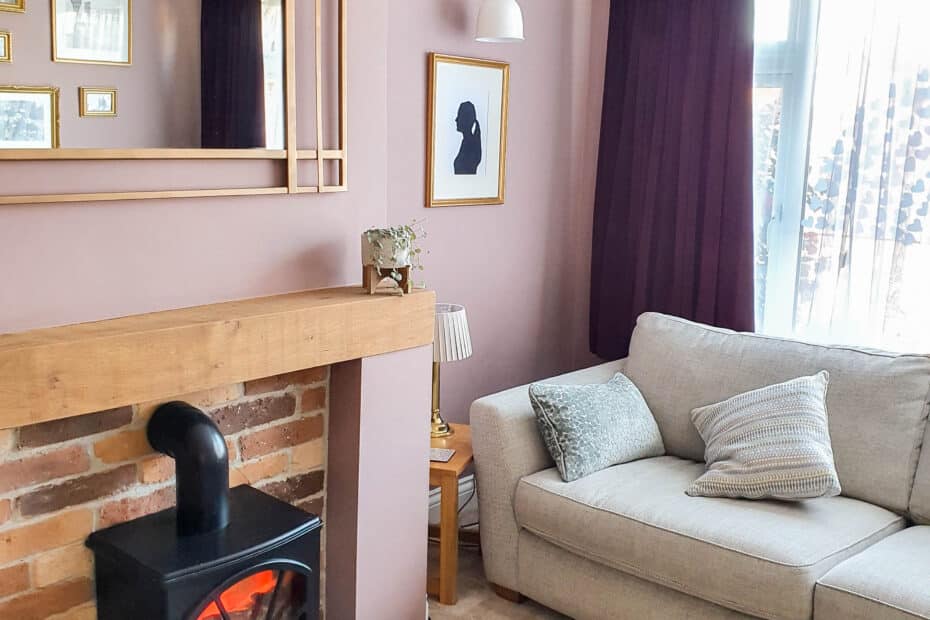
It can be a massive challenge to make small rooms feel bigger, and many people try to decorate with this concept in mind. If you have a smaller house, every inch of space matters and even how you decorate can impact the feeling of roominess. So what are your options? When it comes to furniture, you could try things like symmetrical placement and functional areas.
*Collaborative Post
The Floating Furniture Method
It is kind of a natural instinct to push furniture against the wall as we think that will leave us with more space. Technically, it does, but your brain doesn’t perceive space the way you think. A room can feel larger using the floating furniture method. This is when you pull your new bespoke sofa and side tables away from the walls by about 20cm. It sounds strange, but it really works when going for a more spacious feeling as the gap allows shadows and light to add depth.
Symmetrical and Opposite Seating
Everyone has a different idea of what works for their personal space. Some people find solace in the abstract, and others need unity. When it comes to seating placement, symmetry (which is also one of the most established design rules) will help a smaller room feel larger. An orderly look helps draw the eye to the centre of the room, which takes focus away from spaces that can increase a cramped feeling, such as corners. This is best complemented with neutral decor.
Raised Furniture Can Make Small Rooms Feel Bigger
Around 30% of people believe that changing the colour of a room helps with a simpler room makeover that costs less and makes an impact. For the most part, this is true and small changes like this can help. However, when it comes to furniture such as seating, there are also other options. One of the most useful is to use raised chairs and couches with open legs. Instead of sitting flush to the floor, being able to see the floor makes a space feel less crowded.
Divided Functional Areas
Even an open-plan living space, which is intended to improve the feeling of freedom, can feel cramped. However, you can use furniture as a divider to mark distinct zones for different functions. For example, a well-placed sofa facing away from the dining area marks the division where one functional zone begins and another ends. The idea works in practice because it demonstrates that each area is organised and purposeful instead of appearing chaotic.
Low-Profile Living Room Furniture
While reading this post, you are probably thinking more about the horizontal and functional space of a room. But what about the verticality? A room can feel just as cramped in height as it can in width or depth. Low-profile furniture will open up the space above, and help walls and windows feel larger than they are. This is an effective method when you have a very small space, such as in a flat, and the furniture itself usually takes up much less overall space.
Summary
The floating furniture method will help small rooms feel bigger by adding depth with light and shadow. Raised furniture with legs can also have a similar effect. However, low-profile furniture is excellent for opening up the vertical space of a small room, such as in a tiny apartment.